
What is a CGH (Computer-Generated Hologram)?
A CGH (computer-generated hologram) is an optical reference element used to measure optics with complex shapes. 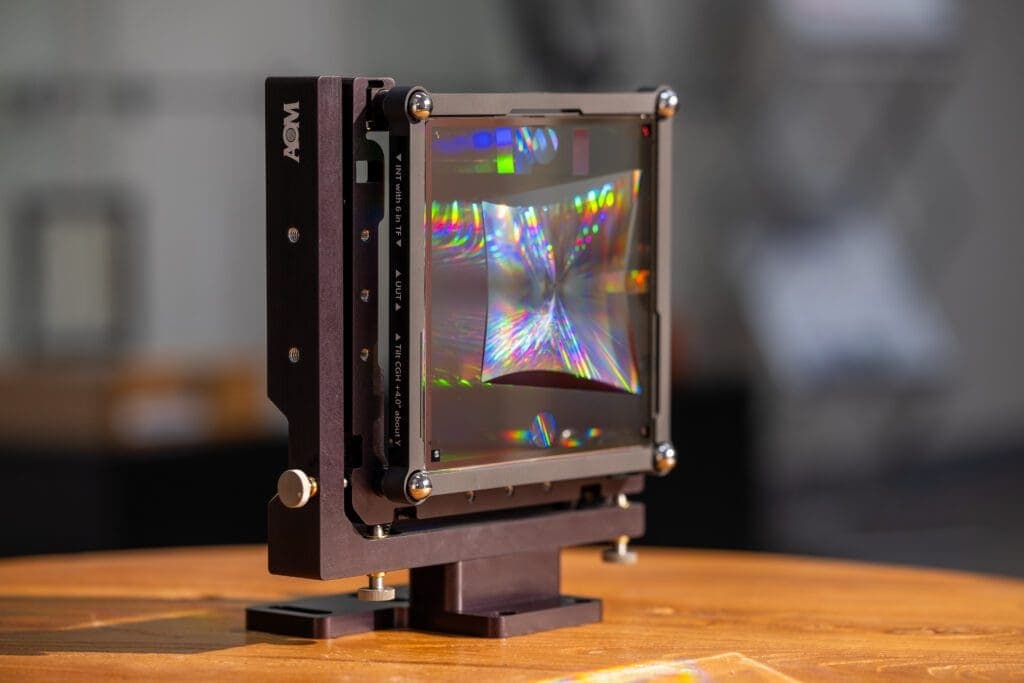
Why use a CGH?
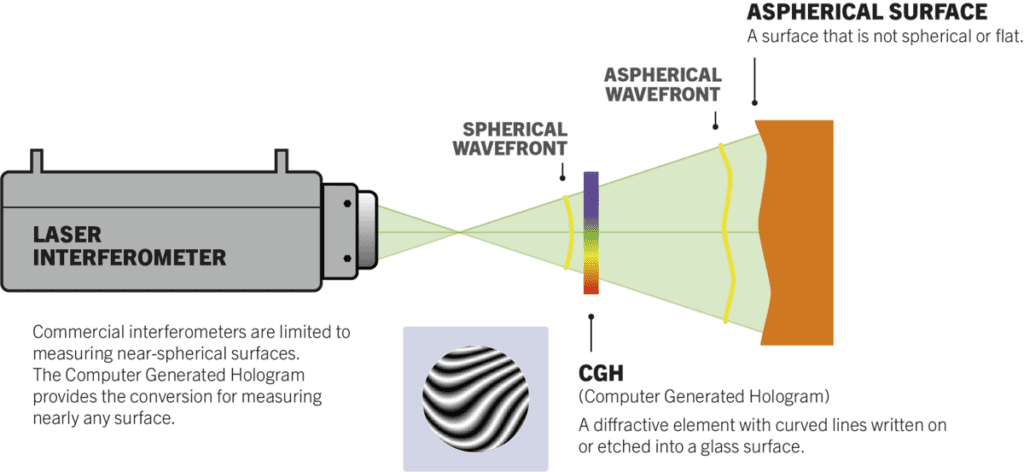
Precision optics are typically measured using a laser interferometer. An interferometer compares the shape of the optic surface, or the wavefront passing through the optic, to a “perfect” reference. It’s relatively easy to measure flat or spherical optics this way, because flat and spherical references are easy to make.
Today’s optics, however, are made with more complex shapes. Elements with aspheric, freeform, conic, and other shapes make it possible to build smaller, lighter-weight optical systems. But measuring complex optics with an interferometer can be challenging, mainly because the reference needs to match the complex surface in order to produce results.
A CGH modifies the test beam of an interferometer, producing a wavefront that can match the complex shape of an optic. With a CGH, an interferometer can measure surface or wavefront quality for complex optics and systems.
Benefits of a Computer-Generated Hologram
A CGH lets you take advantage of the benefits of a laser interferometer to measure aspheres, freeforms, conics, and off-axis sections. The combination of an interferometer and CGH provides:
- snapshot, non-contact, full aperture measurement
- high measurement precision
- high spatial resolution
- cost-effective test setups
In a production environment, a CGH provides the flexibility to measure nearly any optical surface shape. Coupled with part mounting mechanics, a CGH test can provide efficient metrology for high-volume applications.
For large optics like telescope mirrors, a CGH can enable test setups with shorter beam paths, direct full-aperture measurement, and is compatible with vibration-insensitive interferometry. In many cases, a computer-generated hologram may be the only cost-effective method for measuring large optics.
How is a CGH made?
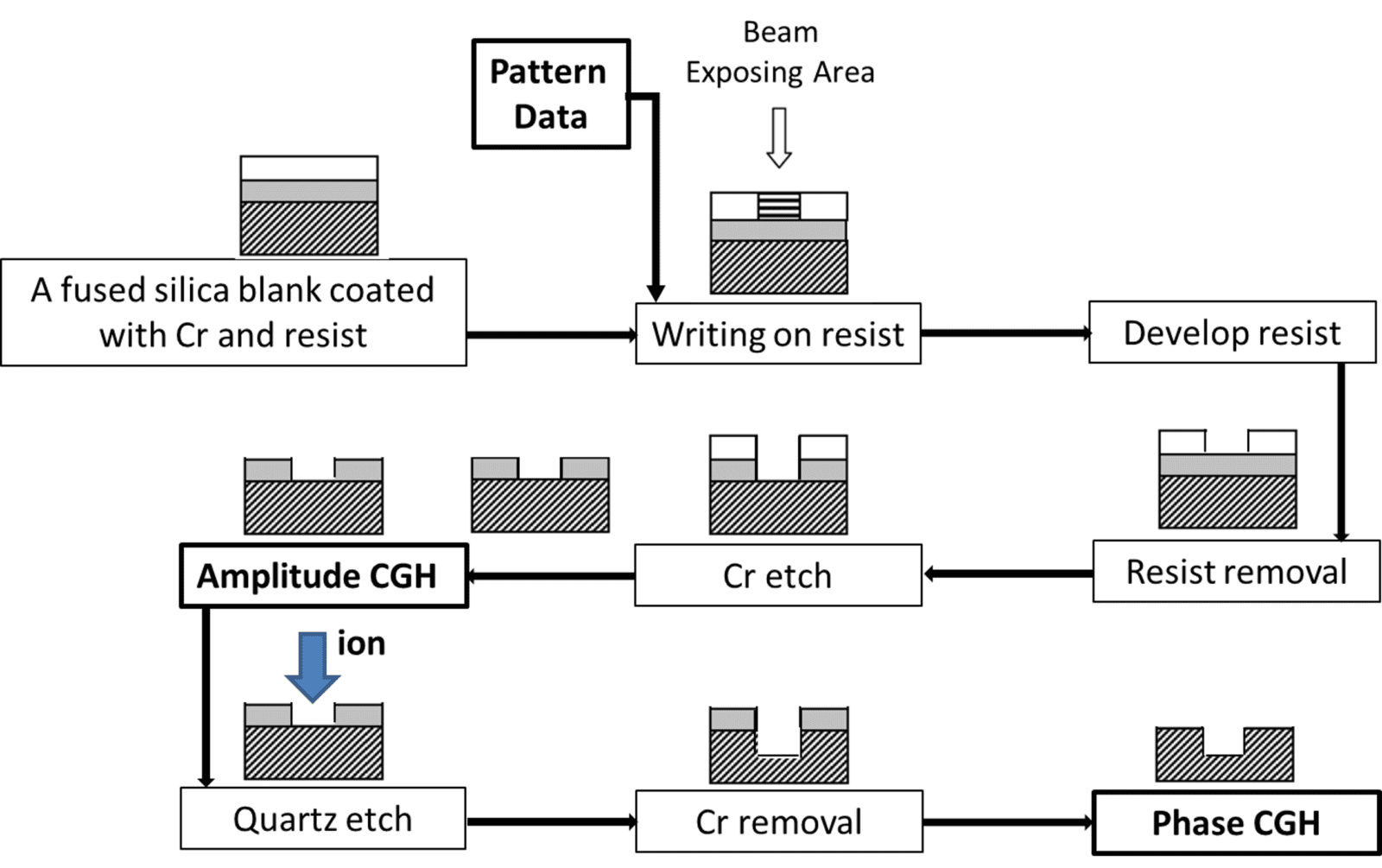
Most computer-generated hologram elements are manufactured using photolithography techniques, making them extremely accurate. A diffractive pattern is designed to create a specific wavefront, and a chrome pattern is printed onto the substrate to create an Amplitude type CGH. Taking this a step further, the pattern can be etched into the glass and chrome layer removed, providing a Phase type CGH. Learn more about why there are different CGH types here.
Can I purchase off-the-shelf CGH elements?
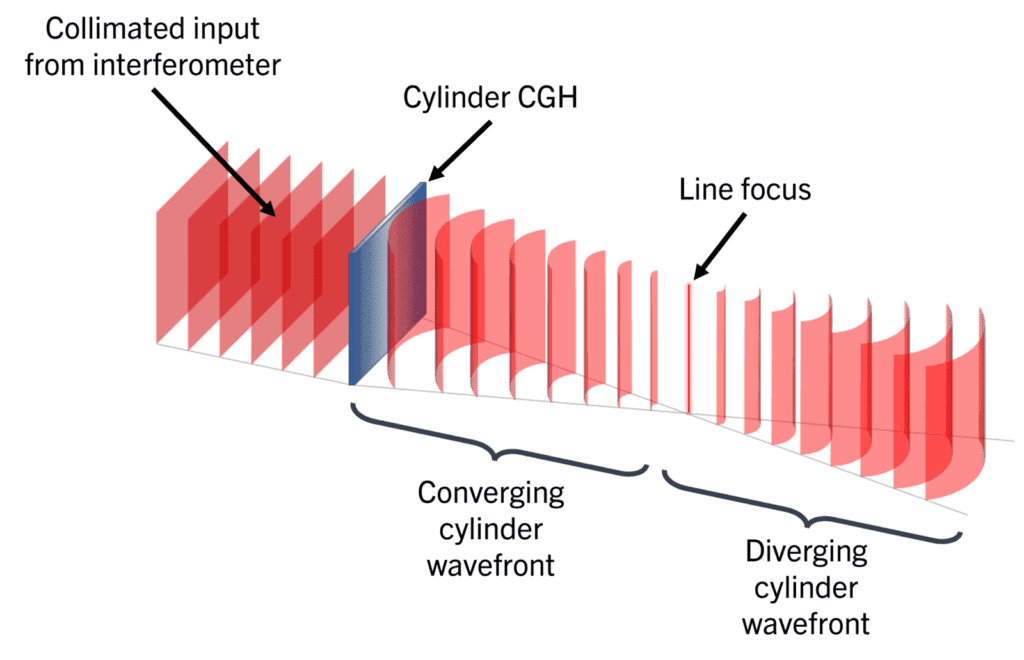
Some complex optical surfaces can be measured using standard CGH elements. For example, concave and convex cylindrical optics can be measured in a confocal null test using a cylinder CGH. These standard products are readily available and easy to incorporate into a test setup. AOM’s Standard cylinder CGHs, for example, are mounted in mechanical cells for fast setup using AOM fine alignment stages.
What is a custom CGH?
More complex shapes may require a customized CGH that’s specific to the test optic design. All custom computer-generated holograms include rigorous design and QC to minimize unwanted reflections, AR coated back surface to minimize unwanted reflections, and low-stress mounting cells.
AOM specializes in designing and manufacturing custom CGHs and optomechanics products to support them. Lead times for custom CGHs are often 8 weeks or less! As your optical metrology partner, AOM’s custom CGH design and fabrication team can help keep your project on schedule and on budget.
How do I specify a CGH?
A computer-generated hologram is specified based on optical surface shape, optical materials, size, and the number of surfaces that should be tested. The requirement list for a custom CGH should include:
- the optical prescription that defines the surface to be fabricated and tested
- the test uncertainty, or accuracy to which we need to measure the surface figure error
- the surface reflectivity at the test wavelength
- alignment requirements to a mechanical datum such as a mounting hole or pin, or an outer diameter
- any alignment requirements of the optical system in which the CGH will function
- user requirements, such as measurement tact time or available space
- any available interferometer and transmission accessories
How do I integrate a CGH into a system?
Once the requirements for a CGH are established, the test design and CGH pattern can be developed. In addition to the CGH itself, AOM engineers can develop the complete test, including alignment strategies, precision mechanics, engineering services, and provide installation and training.
Our Metrology Systems incorporate all of these aspects for a complete metrology solution.
Applications for a CGH
A computer-generated hologram test is ideal for:
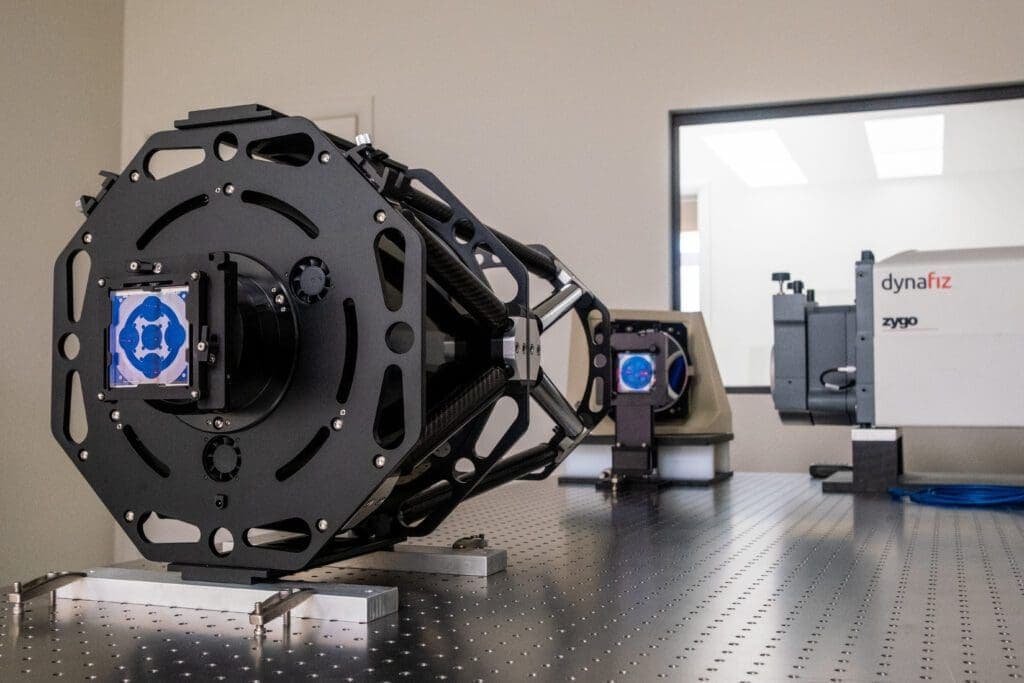
- Large concave optics, like telescope mirrors and directed energy optics
- Very high precision requirements, down to 1 nm uncertainty
- Complex shapes like conic, asphere, off-axis parabola (OAP), and even freeform optical surfaces
- High volume optics production
- System alignment
- “Snap-together” optics
Where can I learn more?
Links to reference material:
- Applications for Computer-Generated Holograms – CGHs
- Advantages of CGH metrology (Video)
- Benefits of a CGH for metrology
- CGH Metrology Alignment: Challenges and Solutions
- New Applications of Computer Generated Holograms for Optical Testing (J. Burge et al)
- Computer-generated hologram for optical testing: a review (C. Zhao)
- Computer Generated Holograms for Optical Testing (J. Wyant)
- Computer Generated Hologram Metrology (Edmund Optics)
- Surface Error of Freeform and Aspheric Optics (4D Technology)
- Computer Generated Hologram (CGH): Complex asphere metrology ideally suited for production-level volumes (Zygo Corporation)
- The making of a Computer-generated hologram (u. Zeitner et al, courtesy of Photonics Spectra)
Contact AOM to discuss your optical testing requirements! We’d be glad to help.